

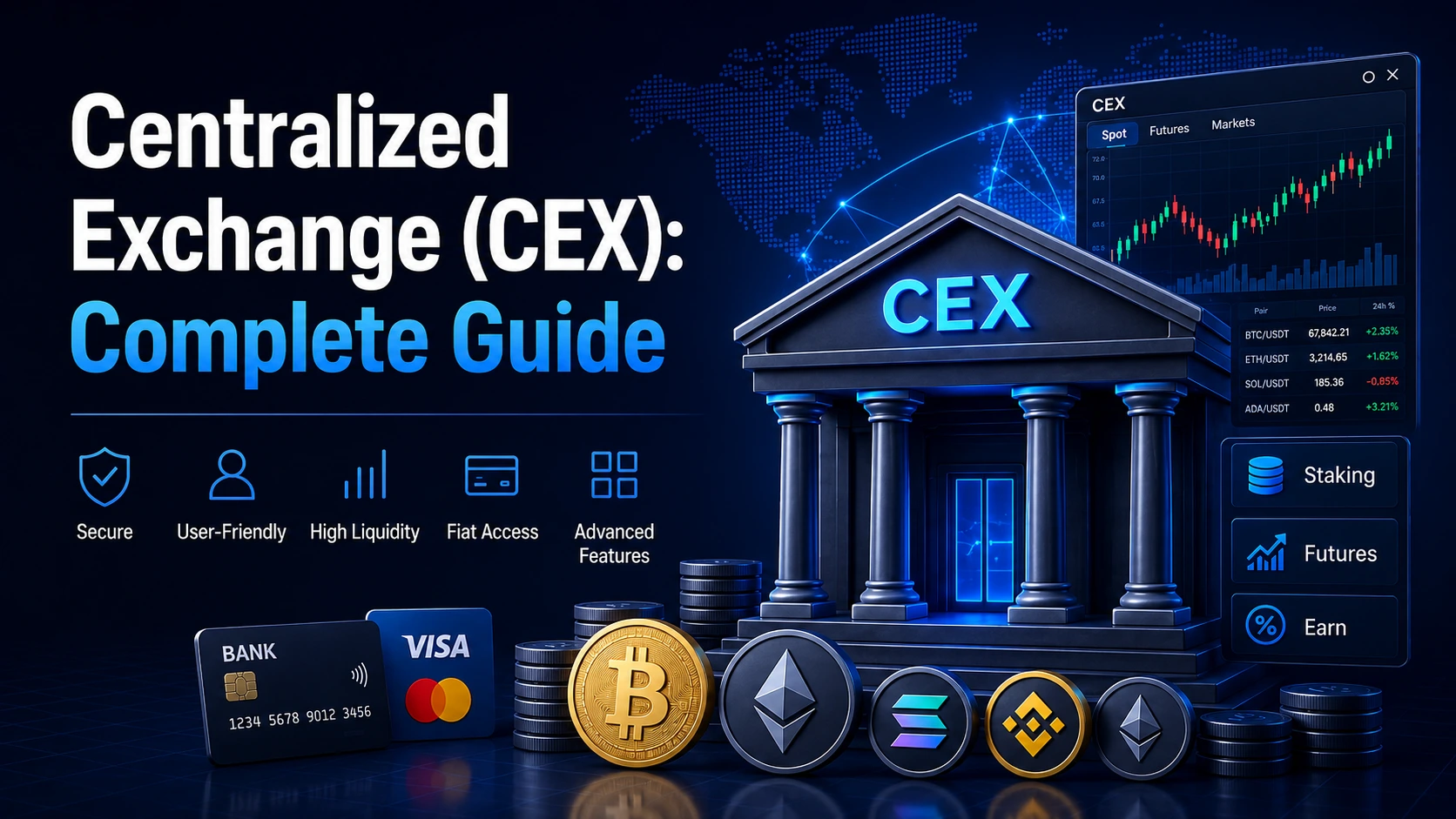
Centralized Exchange (CEX) Guide 2026: Features, Risks & How to Trade
What is a centralized exchange, and how does a CEX work? A centralized exchange is a company-operated platform that allows users to buy, sell, and trade cryptocurrencies through internal order books and matching systems. These platforms often support fiat deposits, spot trading, futures, margin trading, staking, mobile apps, and advanced order types, making them popular with both beginners and experienced traders. This guide explains how centralized exchanges manage user accounts, custody funds, process trades, and handle withdrawals. It also explores the main advantages of CEXs, including high liquidity, fast execution, customer support, fiat access, and user-friendly interfaces. However, users should also understand the risks, such as hacks, withdrawal delays, insolvency, account restrictions, regulatory changes, and dependence on the platform’s security and financial stability. The guide also compares CEXs with decentralized exchanges and explains how to evaluate an exchange based on fees, liquidity, reputation, supported countries, security controls, and proof of reserves.
- Written
- May 31, 2026
- Revision
- Jul 30, 2026
- Views
- 376
- Author
- Matt Barnez
Comments (0)
Share your take on this PDF. New comments are reviewed before they appear.
No comments yet. Be the first to add your perspective.