



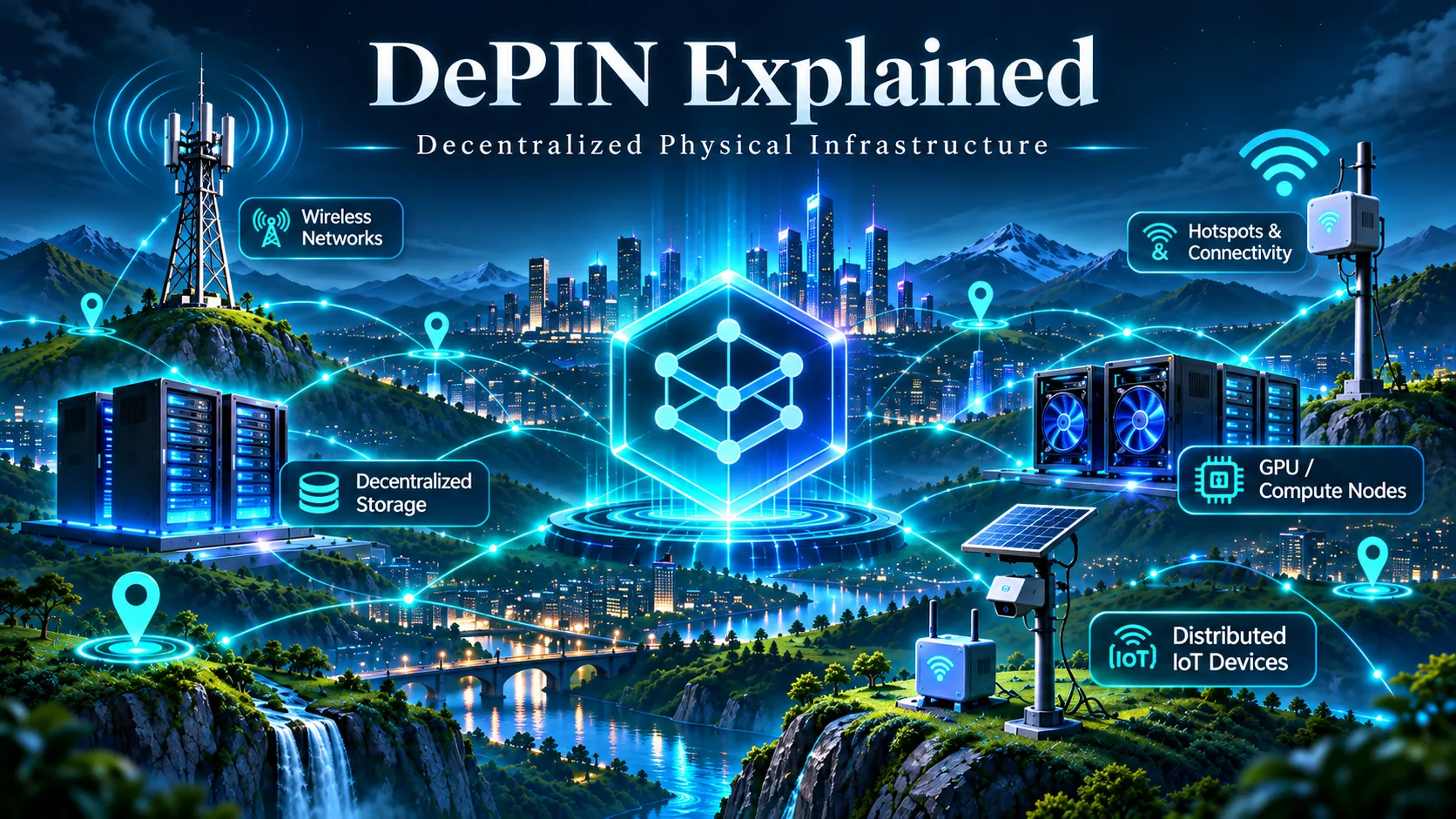
DePIN Explained: Decentralized Physical Infrastructure
What if your Wi-Fi router, computer, or other devices could help power a global network and earn crypto rewards? DePIN (Decentralized Physical Infrastructure Networks) makes this possible by connecting blockchain technology with real-world infrastructure. This article explains how DePIN projects work, their applications in wireless networks, data storage, computing, and mapping, and the role of DePIN tokens. Discover their potential benefits, key risks, and future opportunities.
- Written
- Nov 22, 2026
- Revision
- Nov 22, 2026
- Views
- 10
- Author
- Matt Barnez


FAQ
Frequently Asked Questions
Answers related to this PDF guide.
General
4 questions
What does DePIN mean in crypto?


DePIN stands for Decentralized Physical Infrastructure Networks. It refers to blockchain-based projects that reward participants for contributing real-world infrastructure, such as wireless coverage, storage, or computing resources.
How do DePIN projects make money?
DePIN networks may generate revenue by charging customers for infrastructure services. Contributors can receive token rewards, but those rewards do not necessarily represent profits or revenue generated by the network.
What are some examples of DePIN crypto projects?
Examples include Helium for wireless connectivity, Filecoin for decentralized storage, Render Network for GPU computing, and Hivemapper for mapping infrastructure.
Are DePIN crypto projects good investments?
DePIN projects involve risks related to token prices, customer demand, operating costs, technology, and competition. A useful infrastructure network does not automatically make its token a profitable investment.
Comments (0)
Share your take on this PDF. New comments are reviewed before they appear.
No comments yet. Be the first to add your perspective.