



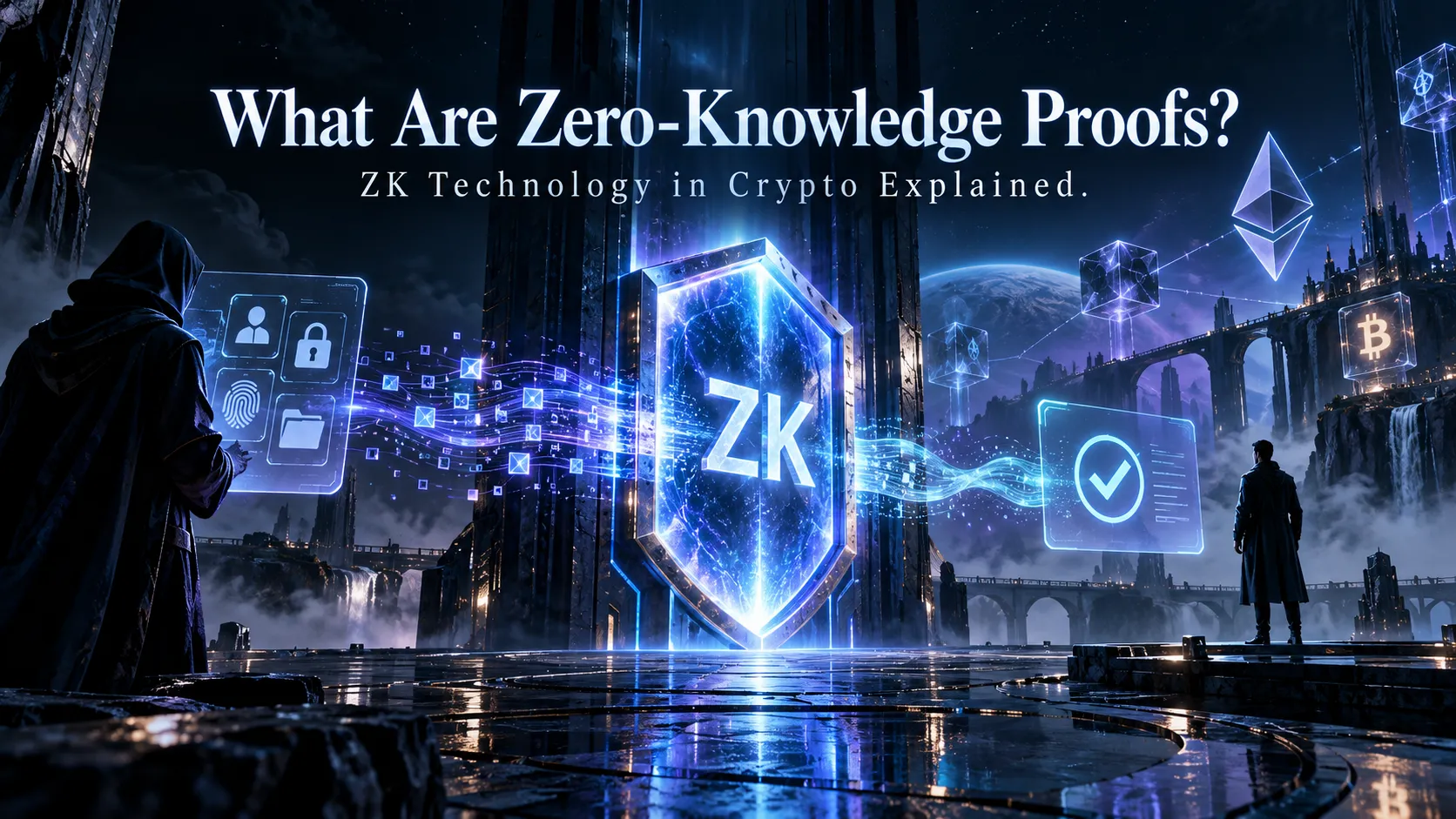
Zero-Knowledge Proofs Explained: ZK Technology in Crypto
What if you could verify information without revealing your private data? Zero-knowledge proofs (ZKPs) make this possible using advanced cryptography. This article explains how ZK technology works, the differences between zk-SNARKs and zk-STARKs, and its applications in blockchain privacy, security, and scalability. Discover the benefits, limitations, and future potential of zero-knowledge proofs in crypto.
- Written
- Nov 15, 2026
- Revision
- Nov 15, 2026
- Views
- 37
- Author
- Matt Barnez


FAQ
Frequently Asked Questions
Answers related to this PDF guide.
General
4 questions
What does ZK mean in crypto?


ZK stands for zero-knowledge, a cryptographic concept that allows a statement to be verified without revealing the private information used to prove it.
Are zero-knowledge proofs completely anonymous?
Not necessarily. Zero-knowledge proofs can protect specific private inputs, but the anonymity of an application depends on its overall design and what information remains publicly accessible.
What is the difference between zk-SNARKs and zk-STARKs?
Both are cryptographic proof-system families. SNARKs often provide smaller proofs, while STARKs commonly use transparent setup procedures and different scalability and security trade-offs.
Are zero-knowledge proofs the same as ZK rollups?
No. Zero-knowledge proofs are a cryptographic technique. ZK rollups are blockchain scaling systems that use validity proofs to verify batches of transactions.
Comments (0)
Share your take on this PDF. New comments are reviewed before they appear.
No comments yet. Be the first to add your perspective.