BingX Copy Trading Review 2026: How It Works, Fees, Profit Sharing & Risks
Introduction
BingX Copy Trading lets users follow selected traders and automatically copy their positions using preset settings. It can reduce the time needed to place trades manually, but it does not remove market risk, leverage risk, slippage, or the possibility of loss.
This BingX Copy Trading review explains how the feature works, the difference between spot and futures copying, how profit sharing is calculated, which costs apply, and what users should check before following a trader.
What Is BingX Copy Trading?
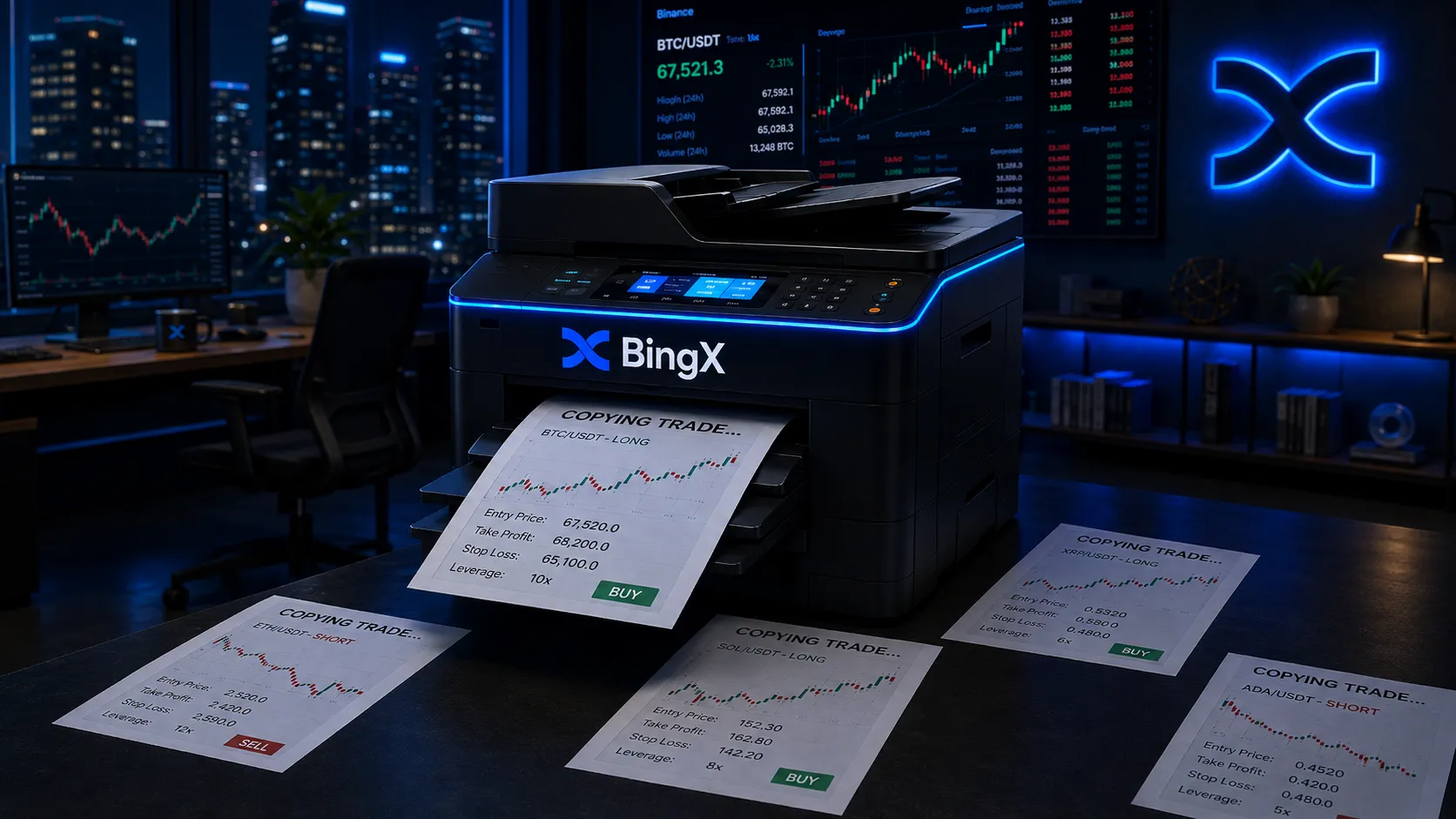
BingX Copy Trading is a social-trading feature that allows one user, known as a copier, to replicate trades opened by another user, known as a lead trader.
Instead of opening every position manually, the copier selects a trader and chooses how much money to allocate. When the trader opens or closes an eligible position, BingX attempts to copy that action in the copier’s account.
The word “attempts” matters.
A copied trade may not open at the same price, time, size, or leverage as the lead trader’s trade. Market movement, minimum order size, account settings, liquidity, slippage, and copy settings can all create different results.
For this reason, copy trading should not be seen as a shortcut to guaranteed returns. It is still trading, but another person is making the initial decisions.
How Does BingX Copy Trading Work?
The basic process is straightforward:
Create and secure a BingX account.
Transfer funds to the relevant copy-trading account.
Open the Copy Trading section.
Browse available lead traders.
Review a trader’s performance and risk data.
Select a copy mode and investment amount.
Confirm your settings.
Monitor copied positions and risk exposure.
Stop copying or change your allocation when needed.
BingX offers different forms of copy trading, including spot copy trading and futures copy trading. The risk level, settings, and cost structure can be different depending on the product.
Before starting, users should check that their country, verification status, and account type support the feature they want to use.
Spot Copy Trading vs Futures Copy Trading
Spot and futures copy trading are not the same product.
Feature | Spot Copy Trading | Futures Copy Trading |
|---|---|---|
What is copied | Spot buy and sell activity | Leveraged long and short positions |
Asset ownership | You generally hold the purchased asset | You hold a derivative position, not the underlying asset |
Liquidation risk | No liquidation in standard spot trading | Yes, liquidation can occur |
Leverage | Not normally involved | Often involved |
Main risk | Asset price falling | Amplified losses, liquidation, and funding costs |
Profit-sharing structure | Usually a simpler structure | Can vary by trader tier and copy mode |
Suitable for | Users who understand spot-market risk | Users who understand leverage and derivatives risk |
Spot Copy Trading
Spot copy trading mirrors a trader’s spot-market activity.
For example, when a lead trader buys BTC using USDT, the copier may also buy BTC based on the copier’s chosen allocation. If the trader later sells the position, the copier’s system may attempt to do the same.
Spot copy trading is generally simpler than futures copying because there is no liquidation from leverage. However, the value of the asset can still fall sharply, and users can still lose money.
A user should not assume that spot means risk-free. It only means the risk is different from leveraged futures trading.
Futures Copy Trading
Futures copy trading mirrors positions in derivatives markets.
A lead trader may open long or short positions, use leverage, set take-profit or stop-loss levels, and trade in fast-moving markets. The copier can be exposed to similar market direction, but the copier’s result may still differ.
Futures copying is higher risk because leverage can magnify losses. A relatively small market move can have a large effect on a leveraged position. In some cases, the position can be liquidated.
Users who do not understand leverage, liquidation, funding fees, cross margin, isolated margin, or position sizing should be careful with futures copy trading.
BingX Copy Trading Modes: Fixed Ratio vs Fixed Amount
BingX provides different ways to copy a trader. The two main settings are Fixed Ratio and Fixed Amount.
Fixed Ratio
Fixed Ratio aims to mirror the trader’s exposure in proportion to the copier’s allocated funds.
For example, if a lead trader uses a certain percentage of their copy-trading capital for a position, the copier’s account attempts to use a similar percentage of the copier’s own allocated amount.
This method may create a closer match to the trader’s risk profile. However, it can also mean that the copier follows the trader’s exposure more closely during volatile periods.
Fixed Ratio does not guarantee identical results. The actual copied trade can still differ because of price changes, minimum order requirements, market depth, account settings, and execution timing.
Fixed Amount
Fixed Amount lets the copier decide a fixed amount of margin for each copied trade.
For example, a user may choose to allocate a set USDT amount per copied order, regardless of the lead trader’s own position size.
This can give the copier more direct control over the size of each copied position. However, setting the amount too low can cause some trades to fail because the order does not meet the minimum margin or quantity requirement.
Fixed Amount can be useful for users who want tighter control over exposure. It still requires monitoring, especially in futures markets.
How to Choose a BingX Copy Trader
The best-looking trader on the leaderboard is not always the safest trader to copy.
A high return can come from high leverage, a short winning period, a strategy that has not faced a major drawdown yet, or positions that are still open at a large unrealized loss.
Before copying a trader, look beyond ROI.
Review the trader’s history.
Check how long the trader has been active.
A trader with a very high return over a few days may have less meaningful history than a trader with moderate results over several months.
Short-term performance can be affected by one favourable market move. Longer histories can provide more context, although they still do not predict future results.
Look at drawdown
Drawdown shows how much a trader’s account or strategy has fallen from a previous peak.
A trader may have a high ROI but also a very large drawdown. This can indicate that the strategy accepts high risk or keeps losing positions open for a long time.
Do not judge a trader only by profit. Compare profit with the size and frequency of losses.
Check open positions and unrealized PnL
Realized PnL is profit or loss from trades that have already been closed.
Unrealized PnL is profit or loss from positions that are still open.
This difference is important. A trader can close profitable trades while leaving large losing positions open. Their public short-term results may look attractive, while the account still carries significant live risk.
Always review both closed trading history and current open-position exposure.
Review the trading style
Try to understand whether the trader is:
Trading spot or futures
Using high leverage
Holding positions for minutes, hours, or days
Opening many trades per day
Trading a narrow group of coins
Using large average position sizes
Following trends, ranges, or volatile news events
A strategy that fits one user may not fit another.
Avoid copying based on follower count alone
A large number of followers does not prove that a trader is low risk or consistently profitable.
Follower count can change quickly. Some users may copy only with a small amount, may have started recently, or may stop copying later.
Treat follower count as context, not evidence of safety.
BingX Copy Trading Fees Explained
BingX copy trading can involve several costs.
The total cost may include:
Futures or spot trading fees
Profit-sharing fees
Funding fees for perpetual futures
Slippage
Spread and market-depth effects
Any optional execution-protection costs
Withdrawal fees if you later move crypto off the exchange
The exact structure can change depending on the copy product, trader type, account tier, and current BingX rules.
Trading Fees
When copied trades are executed, normal platform trading fees can apply.
In futures copy trading, the copier may pay futures trading fees in the same way as a user who trades independently. These fees can vary by product, VIP level, and market conditions.
Users should not assume copy trading is free because the system opens trades automatically.
Profit Sharing
Profit sharing is a separate cost from standard trading fees.
In BingX copy trading, a lead trader can receive a share of the copier’s profit if the copied strategy produces eligible net gains. The share is generally settled on a weekly basis.
Current BingX materials describe different profit-sharing structures by product and trader tier. Spot copy trading is commonly described with a 10% profit share on eligible net gains. Public futures copy trading can use tier-linked profit-sharing rates, while private copy arrangements may use different terms.
The exact percentage shown on the trader’s profile should be checked before copying.
Important Profit-Sharing Risk
Profit sharing can be confusing when a trader has both closed winners and open losing positions.
If profitable copied positions are closed during a settlement period, a profit-sharing amount may be calculated on those closed gains. Large unrealized losses in still-open positions may not be included until they are closed.
This means a copier should not look only at weekly profit. They should also review open positions, unrealized loss, current drawdown, and overall account risk.
Futures Funding Fees
Perpetual futures can include funding payments.
Funding is not the same as a trading fee or profit-sharing fee. It is a periodic payment between long and short traders that can affect the final result of a futures position.
A copied futures strategy may look profitable before funding costs, trading fees, slippage, and profit sharing are considered.
Why Your Results May Not Match the Lead Trader
A common misunderstanding is that the copier will always receive the same ROI as the trader.
That is not guaranteed.
Your BingX copy trading results can differ because of:
Different entry or exit prices
Execution delay
Slippage during fast markets
Minimum order-size limits
Different copy start times
Different copy settings
Unsupported trading pairs
Different leverage or margin settings
Partial fills
Manual changes to copied positions
Deposits or withdrawals during the copy period
Profit-sharing deductions
Even when the same trade is copied, the result may not be identical.
This is especially important during sudden market volatility, where a few seconds of delay can materially change entry or exit prices.
Slippage and BingX 0 Slippage Settings
Slippage happens when a trade executes at a different price from the expected or observed price.
In copy trading, slippage can occur because the lead trader’s order is filled before the copier’s order reaches the market. It can become more noticeable in volatile conditions or less-liquid trading pairs.
BingX offers a 0 Slippage protection setting for eligible copy-trading situations.
This setting aims to prevent a copied trade from opening if the price difference becomes too large. However, the trade may be canceled or handled differently depending on whether it is an opening or closing action and whether the price-deviation threshold is exceeded.
Zero-slippage protection can reduce unwanted price deviation, but it can also cause some copy orders not to execute.
There is no perfect setting for every user. A strict slippage limit may reduce price mismatch but lead to more missed trades. A wider limit may allow more trades to copy but expose the user to worse execution.
Why BingX Copy Trades Can Fail
Copy-trading failures are not always a technical error.
A copied order may fail because:
The copier has insufficient available margin.
The chosen amount is below the minimum order size.
The trader uses a trading pair that is not supported for copying.
The trader’s original order was only partially filled.
The copier’s position limit has been reached.
The selected leverage or margin mode is inconsistent.
The execution price exceeds the copier’s maximum slippage setting.
The market is moving too quickly.
The platform is under maintenance.
Network instability affects execution.
A failed copy order can change the copier’s exposure relative to the lead trader. This is one reason copied results should never be expected to match perfectly.
Can You Stop Copying a Trader?
Yes. BingX allows users to stop copying a trader.
Before you stop, review whether there are still open copied positions and whether the platform will close, retain, or return funds according to the selected product and copy-trading rules.
If you stop copying after profits have been generated, a profit-sharing amount may still be withheld and settled during the next applicable settlement cycle.
Stopping a trader does not remove losses already incurred. It only prevents future copied activity according to the platform’s process.
BingX Copy Trading Risk Checklist
Before copying any trader, use this checklist:
Start with an amount you can afford to lose.
Prefer a small test allocation before increasing exposure.
Review the trader’s full history, not only recent ROI.
Check drawdown and current unrealized PnL.
Understand whether the trader uses spot or leveraged futures.
Review the profit-sharing percentage.
Check whether funding fees may apply.
Use Fixed Amount if you want tighter per-trade exposure control.
Set realistic slippage limits.
Monitor open copied positions regularly.
Do not assume a top-ranked trader will remain profitable.
Avoid using borrowed money or funds needed for essential expenses.
BingX Copy Trading Pros and Cons
Pros | Cons |
|---|---|
Lets users follow traders without placing every order manually | Copying does not guarantee the same price, PnL, or ROI as the trader |
Offers spot and futures copy-trading options | Futures copying can lead to rapid losses or liquidation |
Fixed Amount and Fixed Ratio settings provide different control levels | High ROI can hide large drawdowns or open losses |
Users can review trader data before copying | Trading fees, funding, slippage, and profit sharing can reduce returns |
Slippage controls can help manage execution risk | Strict controls may cause missed copy orders |
Users can stop or adjust copy settings | Copy-trading decisions still require active monitoring |
Conclusion
BingX Copy Trading can be useful for users who want to study trader behaviour, automate parts of their execution, or access structured copy-trading controls.
However, it should not be treated as passive income or a replacement for understanding risk. The copied trader can lose money, the copier can receive different execution, and futures positions can be liquidated.
Spot copy trading may be easier to understand because it does not use liquidation-based leverage. Futures copy trading is more complex and should be approached carefully because leverage, funding, drawdown, and slippage can amplify losses.
The safest way to evaluate BingX copy trading is to start small, review the trader’s open and closed performance, understand all fees, and monitor the copied account rather than assuming the system will manage risk for you.
This article is for educational purposes only. It is not financial advice and is not a recommendation to copy a trader, trade futures, or hold funds on BingX.