Bybit Review 2026: Safety, Fees, KYC, Withdrawals, Features & Risks
Introduction
Bybit is a major centralized cryptocurrency exchange offering spot trading, futures, perpetual contracts, copy trading, trading bots, crypto purchases, P2P trading, Earn products, and other crypto-related services.
It is particularly well known for derivatives trading and advanced trading tools. However, choosing an exchange should involve more than comparing headline fees or available features. Users should also understand identity-verification requirements, withdrawal rules, regional restrictions, custody risk, and the consequences of keeping funds on a centralized platform.
This Bybit review explains how the platform works in 2026, including its safety profile, fees, KYC requirements, withdrawal process, buying options, main products, supported-region limitations, and the risks users should consider before depositing funds.
What Is Bybit?
Bybit is a centralized crypto exchange founded in 2018. It provides access to spot markets, derivatives, copy trading, trading bots, P2P markets, crypto buying tools, Earn products, token campaigns, and institutional trading services.
Unlike a decentralized exchange, Bybit holds customer balances within its own platform infrastructure. This can make trading, order execution, and account management easier, but it also means users rely on Bybit’s security practices, internal controls, compliance procedures, and ability to process withdrawals.
Bybit may appeal to users looking for:
Spot crypto markets
Perpetual and futures contracts
Advanced charting and order types
Copy trading and automated trading bots
Crypto purchases using supported fiat payment methods
P2P trading
Earn and yield-related products
Launchpad events and token campaigns
Company background and availability
Bybit operates internationally through different entities and services depending on the user’s location. The platform’s availability, legal entity, payment methods, product access, and verification requirements can vary by country or region.
The fact that a website is accessible does not necessarily mean that every Bybit product is available or permitted where you live. Before depositing funds, check the platform’s current eligibility rules, its restricted-country page, and the local rules that apply to crypto trading and fiat payments in your jurisdiction.
Who typically uses Bybit?
Bybit is often used by active crypto traders who want more than a simple buy-and-hold platform. Its product range may suit users interested in spot trading, derivatives, copy trading, bots, or advanced order management.
However, more features do not automatically mean the platform is better for every person. Beginners may find the interface, leverage options, and product menu overwhelming. Users who only want to buy crypto occasionally and hold it in a personal wallet may prefer a simpler route.
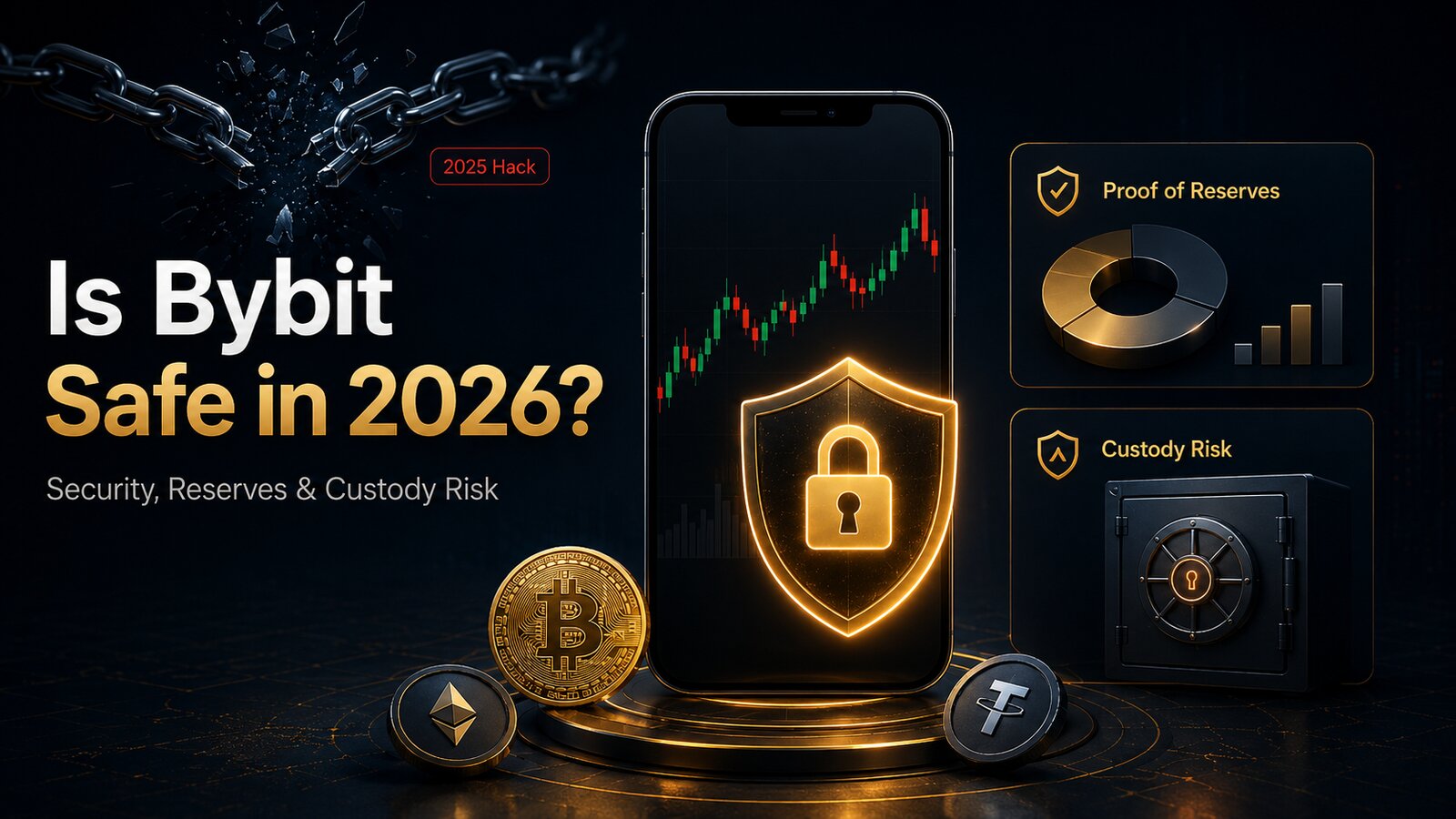
Is Bybit Safe? Security, Proof of Reserves, and the 2025 Hack
Bybit offers several account-security and risk-control tools, including two-factor authentication, withdrawal verification, address-management features, device controls, and Proof of Reserves reporting.
These measures are useful, but they do not make a centralized exchange risk-free. When users deposit crypto on Bybit, the platform controls the private keys and processes withdrawals. In practical terms, users are trusting Bybit’s custody systems, wallet infrastructure, compliance decisions, security procedures, and financial operations.
Custody and platform risk
Centralized exchanges offer convenience, liquidity, and access to trading products. The trade-off is custody risk.
When assets remain on an exchange, users do not directly control the private keys. If the exchange experiences a security incident, technical disruption, legal issue, liquidity problem, or account-level review, access to funds may be affected.
This does not mean users should never use an exchange. It means an exchange should generally be treated as a platform for trading and converting assets, rather than as a permanent storage solution for large long-term holdings.
Proof of Reserves
Bybit publishes Proof of Reserves information intended to show that it holds assets backing customer balances. This can improve transparency by allowing users to review information about reported assets and liabilities.
However, Proof of Reserves should not be treated as a complete guarantee of safety. It does not eliminate every form of risk, including:
Operational failures
Cybersecurity incidents
Internal control problems
Legal or regulatory restrictions
Withdrawal delays during periods of stress
Wallet infrastructure or smart-contract risks
Account-specific compliance reviews
Proof of Reserves is a positive transparency measure, but it is only one part of a broader risk assessment.
What the 2025 Bybit hack means for users
In February 2025, Bybit suffered a major security incident involving approximately $1.5 billion in virtual assets. The FBI later attributed the theft to North Korea-linked actors identified as TraderTraitor.
Bybit said that customer funds remained backed and that withdrawals continued. Even so, the event created significant pressure on the platform and remains highly relevant to any safety assessment.
The lesson is not simply that Bybit is either “safe” or “unsafe.” The more useful conclusion is that large exchanges can still face serious security events. Users should therefore limit unnecessary exchange exposure, use strong account security, and keep long-term holdings in a personal wallet where appropriate.
Bybit KYC, Withdrawals, and Account Limits
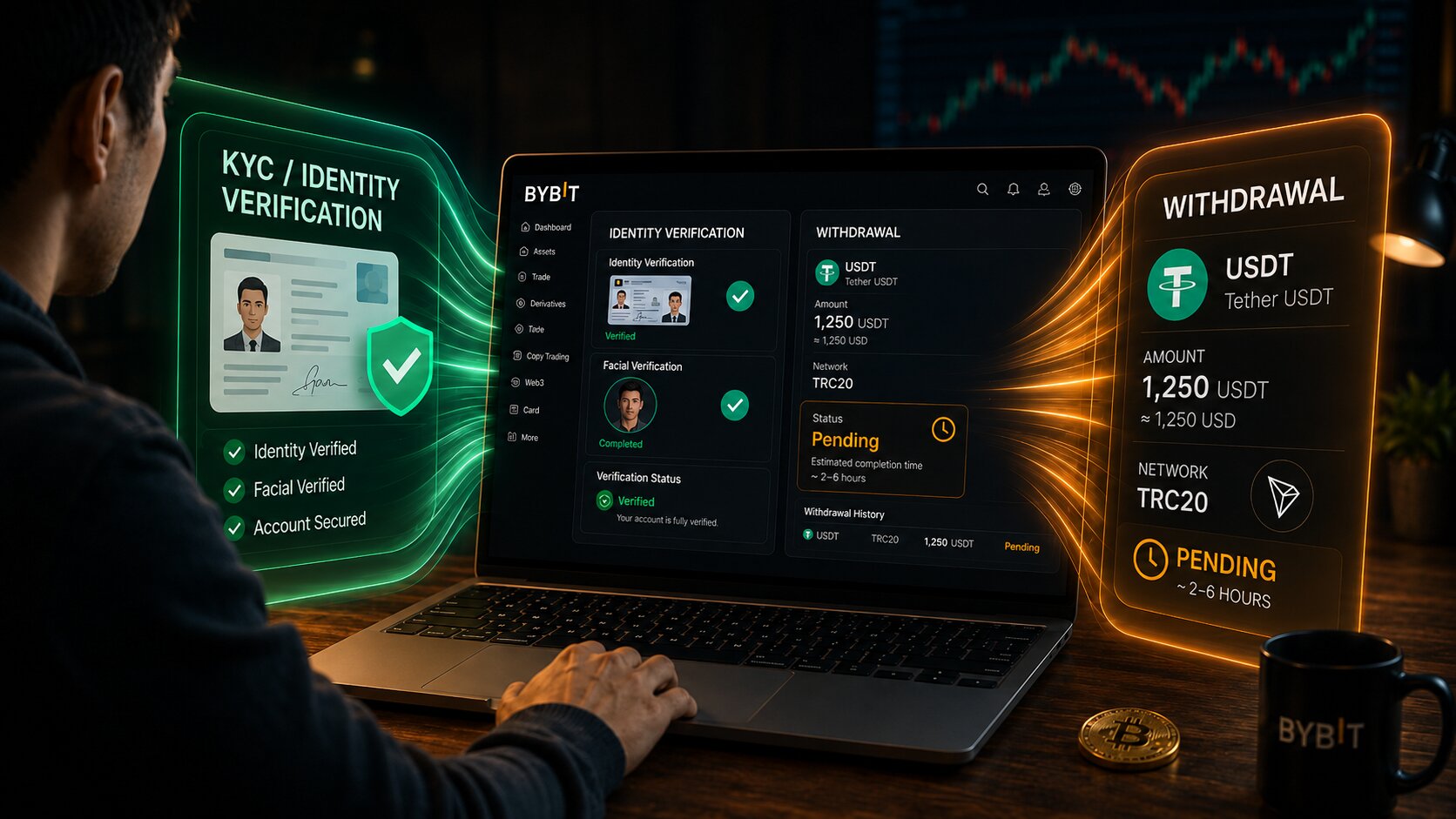
KYC and withdrawal rules are among the most important issues to understand before using Bybit. They can affect account access, fiat payment options, P2P eligibility, product availability, withdrawal limits, and the time needed to move funds off the platform.
A common mistake is depositing funds first and checking verification or withdrawal requirements later. A safer approach is to complete the required verification and review the withdrawal process before sending a large amount of crypto or fiat to the exchange.
For a more detailed walkthrough, link here to your dedicated Bybit KYC and withdrawals guide.
KYC requirements and verification levels
KYC means “Know Your Customer.” It is the process used by financial platforms and exchanges to verify a user’s identity, assess risk, and meet compliance requirements.
Bybit’s current public guidance describes Standard identity verification as the baseline requirement for access to its products and services. Higher verification levels may be required depending on the user’s country, account activity, product access, withdrawal needs, or compliance review.
Verification may involve:
Personal information
Government-issued identity documents
Facial verification
Proof of address
Additional source of funds or enhanced due diligence checks in some cases
Users should ensure that their account details match their documents. Mismatched names, outdated information, or unclear documentation can create verification delays.
Why KYC matters
KYC can affect several parts of the Bybit experience, including:
Account access
Withdrawal limits
Fiat buying and selling options
P2P access
Earn-product eligibility
Card-related services
Risk reviews and compliance checks
Access to higher limits or certain promotions
Complete verification before depositing significant funds. This does not eliminate every possible delay, but it reduces the chance of discovering a verification requirement only when trying to withdraw.
Crypto withdrawals
Crypto withdrawals depend on the asset, blockchain network, account-verification level, security settings, available balance, withdrawal limits, and network conditions.
Before confirming a withdrawal, check all of the following:
The correct wallet address
The selected blockchain network
Whether a destination tag or memo is required
The withdrawal fee
The minimum withdrawal amount
The available balance after open orders, collateral, or Earn allocations
The recipient platform’s supported network
Sending crypto through an unsupported network or to an incorrect address can lead to permanent loss. For a first withdrawal to a new wallet or exchange, a small test transaction is usually the safest approach.
Bybit’s withdrawal limits can change depending on verification status, VIP level, and account type. Review the current limit shown in your own account rather than relying on an old number found in an article or social-media post.
Fiat withdrawals
Fiat withdrawal availability depends heavily on a user’s country, currency, KYC status, payment provider, and applicable Bybit entity.
Some users may have access to bank transfers or other local payment channels, while others may only be able to withdraw crypto. Even where fiat withdrawals are available, limits, fees, processing times, and supported currencies can differ.
Before using Bybit as a fiat off-ramp, confirm:
Whether fiat withdrawal is available in your country
Which currencies are supported
The payment method and provider involved
Minimum and maximum withdrawal amounts
Fees and exchange-rate spreads
Expected processing times
Any account-level verification requirements
Do not assume that being able to buy crypto with fiat automatically means you can withdraw fiat through the same method.
Common reasons withdrawals are delayed or unavailable
Withdrawals can be delayed, rejected, or temporarily restricted for several reasons, including:
Verification not completed
New or changed security settings
A recently added withdrawal address
Suspicious login activity
Compliance or AML review
Network congestion or wallet maintenance
Incorrect wallet address, network, tag, or memo
Withdrawal limits are being reached
Funds locked in open orders, margin positions, staking, Earn products, or settlement processes
An available balance that is lower than the total displayed balance
Users should distinguish between the total account balance and the withdrawable balance. Crypto may appear in an account but still be locked in a trading position, pending order, product subscription, or collateral requirement.
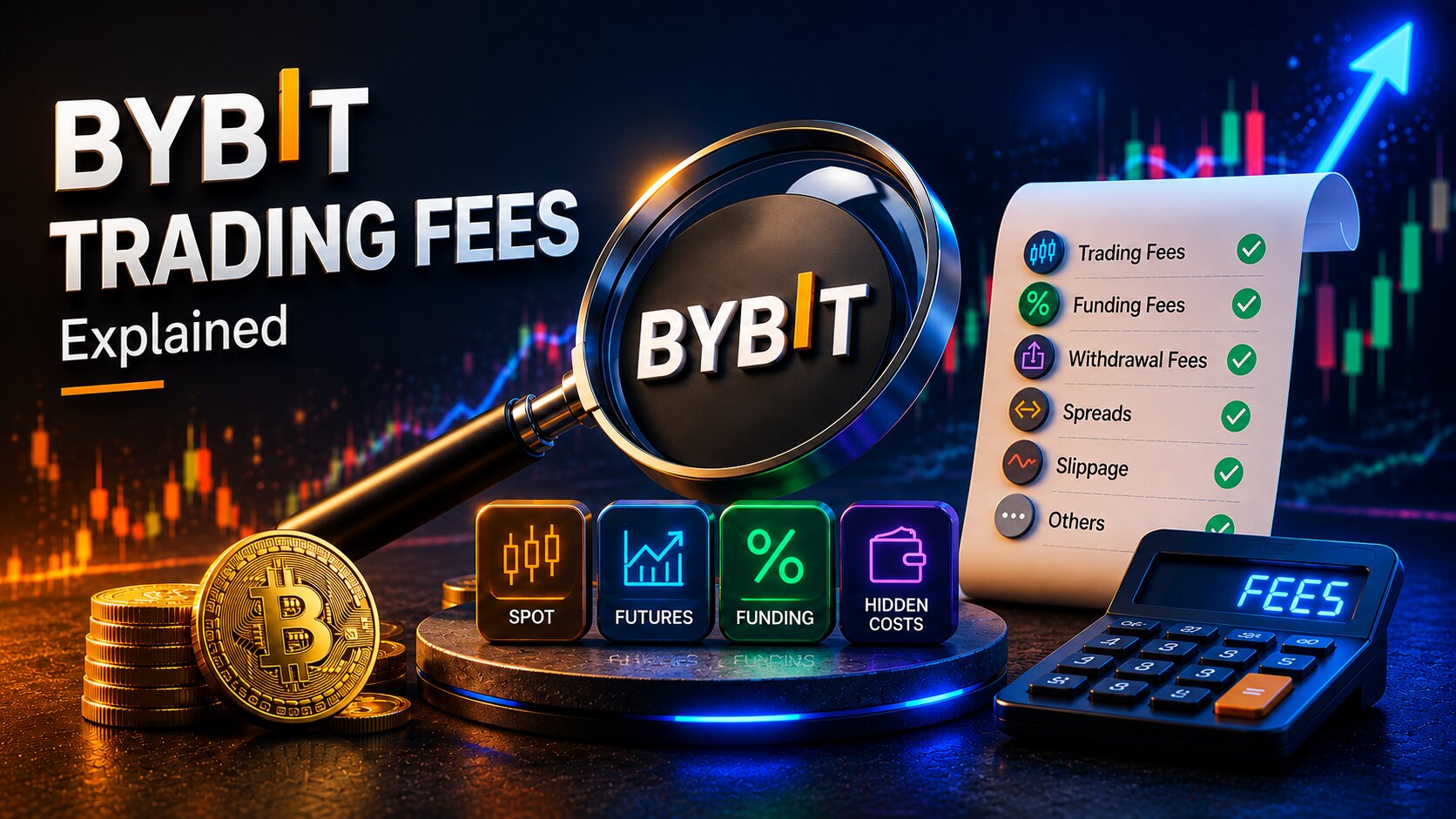
Bybit Fees and Trading Costs
Bybit charges different fees depending on the product, trading volume, account tier, market, region, and payment method. Fees can change, so users should always review the current fee schedule in their account before trading.
For standard non-VIP users, published headline fees have commonly included spot maker and taker fees of around 0.1%, plus derivatives fees that are generally lower on a percentage basis. However, these figures should be treated as a starting point, not a universal promise.
Spot trading fees
Spot trading means buying or selling the underlying crypto asset, such as BTC, ETH, USDT, or another supported token.
For regular non-VIP users, Bybit’s standard published spot trading rates have commonly been:
Maker fee: 0.1%
Taker fee: 0.1%
A maker order adds liquidity to the order book by waiting for another trader to match it. A taker order removes liquidity by matching immediately with an existing order.
Spot trading is usually easier for beginners to understand than futures because the user is trading the underlying asset rather than opening a leveraged contract.
Futures and perpetual fees
Bybit is especially known for perpetual and futures contracts. Standard published derivatives fees for non-VIP users have commonly been around:
Maker fee: 0.02%
Taker fee: 0.055%
Futures fees may appear lower than spot fees, but the overall risk is much higher because futures can involve leverage, liquidation, funding payments, and rapid changes in position value.
Low trading fees should never be the main reason to use leverage. A small market move can create a loss that is far larger than the fee difference between spot and futures trading.
VIP discounts
Bybit offers a VIP program that can provide lower fees and other benefits for higher-volume users or qualifying account types. Benefits can include reduced maker and taker fees, higher withdrawal limits, and additional services.
This matters most for active traders. Beginners should prioritize account security, verification, withdrawal access, and risk management before focusing on fee-tier optimization.
Other costs to consider
Trading costs go beyond maker and taker fees. Users should also consider:
Blockchain withdrawal fees
Funding rates on perpetual contracts
Spread costs
Third-party payment-provider fees
Fiat conversion charges
Card-processing fees
P2P price differences
Currency conversion spreads
An exchange can appear inexpensive based on a headline trading fee but become more costly once funding, spread, conversion, payment, and withdrawal costs are included.
How to Buy Crypto on Bybit
Bybit offers several ways to buy crypto. The options available to an individual user depend on country, verification status, payment method, and local service availability.
One-Click Buy
One-Click Buy is designed for users who want a simpler fiat-to-crypto purchase process without using a spot-trading order book.
Depending on the country and supported options, payment methods may include:
Bank cards
Fiat balances
Third-party payment providers
Other locally supported channels
The final purchase cost may include more than the visible crypto price. Check the provider fee, exchange-rate spread, payment fee, and refund policy before confirming a purchase.
P2P trading
Bybit P2P allows users to buy or sell crypto directly with other users through supported payment methods. The platform generally acts as an escrow layer while the buyer and seller complete the payment process.
P2P can be useful in regions where bank-card or direct fiat options are limited. However, users should be particularly careful because the payment occurs between individuals.
Key P2P safety rules include:
Never release crypto before confirming payment in your own account
Do not rely on screenshots or payment notifications alone
Avoid off-platform communication and arrangements
Be cautious when the payer’s name does not match the account holder's name
Do not accept pressure to cancel, release, or move the transaction outside the platform
Be skeptical of unusually high or low prices
P2P escrow can reduce some risks, but it does not replace basic caution.
Third-party payment providers
Some crypto purchases may be processed by third-party providers rather than directly by Bybit. In these cases, the provider’s own fees, KYC requirements, refund rules, supported countries, and processing times may apply.
Before using a third-party provider, review:
Total purchase cost
Exchange rate
Payment method accepted
KYC requirements
Refund and cancellation policy
Estimated delivery time
Country eligibility
This is especially important when buying crypto with a card, because spreads and provider fees can make the effective purchase price higher than expected.
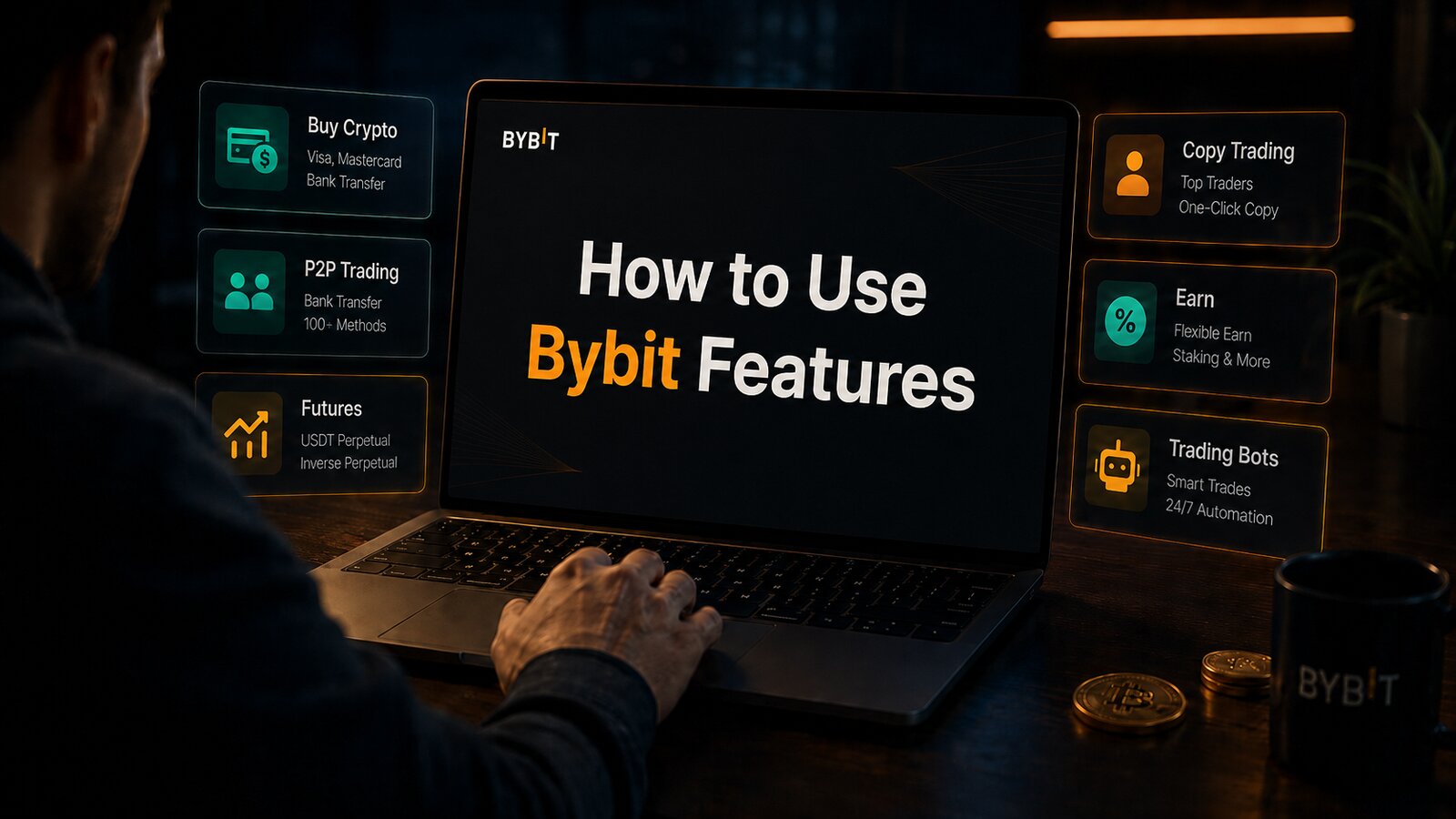
Bybit Features and Products
Bybit offers a broad range of products, which is one reason it attracts both retail users and active traders. The downside is that the platform can become complex quickly, particularly for people who are new to crypto.
Spot trading
Spot trading allows users to buy and sell actual crypto assets. It is generally the simplest trading product on the platform and may be more suitable for users who want direct crypto exposure without leverage.
Spot trading still involves market risk. A user can lose money if the asset price falls after purchase.
Futures and perpetual contracts
Perpetual contracts allow users to speculate on crypto price movements without directly owning the underlying asset. Users can take long or short positions and may use leverage.
Futures trading carries serious risks:
Leverage can multiply losses
Liquidation can close a position automatically
Funding payments can affect longer-term positions
Volatility can cause rapid losses
Beginners may overtrade because positions are easy to open
Futures are advanced products. Users should not trade with leverage until they understand margin, liquidation, funding rates, position sizing, and stop-loss risk.
Copy trading
Bybit copy trading allows users to follow and automatically copy selected traders. It can make trading feel easier, but it does not remove market risk.
A copied trader can lose money, change strategy, increase leverage, or experience a large drawdown. Past performance is not a reliable guarantee of future results.
Before copying a trader, review:
Historical drawdown
Leverage use
Trade frequency
Strategy style
Asset concentration
Time horizon
Risk score or risk description
Performance across different market conditions
Copy trading should not be treated as a passive guaranteed income.
Bybit Earn
Bybit Earn includes products designed to generate potential yield on crypto assets. These may include flexible products, fixed-term products, on-chain options, or more advanced structured products.
Potential benefits can come with important trade-offs, including:
Changing APYs
Lock-up periods
Delayed redemption
Counterparty risk
Market-dependent returns
Product complexity
Platform dependency
Advertised yields should not be treated as guaranteed income. Read the product terms and understand when funds can be redeemed before subscribing.
Trading bots
Bybit offers trading bots that can automate selected strategies. Bots can help apply rules consistently, but they do not make a weak strategy profitable.
A bot follows preset instructions. In a fast-moving or unfavorable market, it can continue losing money automatically.
Users should start with small amounts, understand the strategy settings, and avoid relying on a bot they cannot explain.
Launchpad and token campaigns
Launchpad events, token sales, reward programs, and promotional campaigns can provide access to new tokens or limited offers.
These opportunities can be appealing, but new tokens are often highly volatile. Campaigns may include eligibility requirements, lockups, snapshots, trading-volume conditions, or limited allocations.
Read all terms before participating, and do not assume that a promotional event will be profitable.
Bybit Card
Bybit offers card-related services in some regions. Availability, rewards, spending limits, supported currencies, and fees depend on the country and service entity.
Before applying for or using a card, check whether it is available in your region and review the current terms carefully.
Supported Countries and Restrictions
Bybit is not available in every country, and access to individual products can vary even within supported regions.
Restrictions may affect:
Account registration
Identity-verification approval
Crypto deposits and withdrawals
Fiat payments
P2P access
Futures and leveraged products
Earn products
Promotions
Card services
The most important rule is simple: do not use a VPN, false address, borrowed documents, or misleading location information to bypass restrictions. Doing so can violate platform terms and may create serious account-access or withdrawal problems later.
Users should check both the general restricted-country policy and the product-specific eligibility rules. For example, a country may have access to spot trading but not futures, cards, fiat withdrawals, or a particular payment provider.
Bybit Pros, Cons, and Who It Is Best For
Pros
Bybit’s main advantages include:
Broad range of crypto products
Strong focus on derivatives and active trading tools
Spot, futures, copy trading, bots, P2P, Earn, and Launchpad features
Competitive published fee structure for many products
VIP benefits for high-volume users
Proof of Reserves reporting
Fiat buying options in supported regions
Web and mobile access
Advanced order tools and trading interface
Cons
Bybit also has important limitations:
Not available in all countries
Centralized custody risk
The 2025 security incident remains relevant to its risk profile
Futures and leverage can be dangerous for beginners
Verification requirements can affect access and withdrawals
Fiat options depend on the country and the payment provider
P2P trading involves counterparty and payment risk
Earn products may involve lockups or changing rates
Compliance reviews can delay account actions
The platform may feel complex for first-time users
Who should consider Bybit?
Bybit may be suitable for:
Active crypto traders
Users who understand derivatives and leverage
Traders who want advanced charting and order tools
Users interested in copy trading or automated bots
People in supported countries who can complete verification
Traders who understand exchange-custody risk
Who may be better served elsewhere?
Bybit may be less suitable for:
Users in restricted countries
Beginners who do not understand leverage
People who want only a simple buy-and-hold experience
Users who need guaranteed fiat withdrawal access
People unable or unwilling to complete KYC
Users who plan to keep large crypto balances on an exchange long-term
Anyone looking for a risk-free yield or passive income
Key Risks and Safer Ways to Use Bybit
Using Bybit involves the same broad risks that apply to most centralized crypto exchanges, plus product-specific risks from derivatives, P2P transactions, and yield products.
Main risks
Custody risk: Bybit controls the private keys for crypto held on the platform. Users depend on the exchange’s systems and withdrawal process.
Security risk: Major exchanges can still face sophisticated attacks. Account-security tools reduce risk but cannot eliminate platform-level or user-level threats.
KYC and compliance risk: Identity checks, source-of-funds requests, or account reviews can limit functionality or delay withdrawals.
Regional restriction risk: Users in unsupported jurisdictions may face account limitations. Misrepresenting location or identity can make problems more serious.
Leverage risk: Futures and margin products can cause rapid losses and liquidation.
P2P payment risk: Users must verify payments independently and avoid off-platform arrangements.
Earn-product risk: Yield products can involve lockups, changing returns, redemption delays, and platform dependency.
Safer-use checklist
Users who choose to use Bybit can reduce avoidable risk by following these practices:
Complete KYC before depositing large amounts
Test withdrawals with a small amount first
Double-check wallet addresses, networks, and tags
Use two-factor authentication
Enable anti-phishing protections and withdrawal-address controls
Use a strong, unique password
Monitor account devices and sessions
Keep only trading funds on the exchange
Avoid high leverage unless you fully understand the downside
Read the Earn-product terms before subscribing
Keep P2P transactions on the platform
Check regional restrictions before depositing
Keep records of deposits, trades, and withdrawals
Use a personal wallet for long-term holdings where appropriate
The safest approach is to treat Bybit as a trading platform, not as a permanent crypto bank.
Conclusion
Bybit is a feature-rich crypto exchange with spot markets, derivatives, copy trading, trading bots, Earn products, P2P access, and multiple ways to buy crypto. For experienced traders in supported regions, it can be a powerful platform.
However, Bybit is not risk-free. Users should consider custody risk, KYC requirements, withdrawal rules, regional restrictions, fiat-access limitations, and the significance of the 2025 security incident.
For beginners, the safer approach is to start slowly. Complete verification before depositing major funds, test the withdrawal process, avoid leverage until you understand it, and move long-term holdings to a personal wallet when appropriate.
Bybit can be useful in 2026, but it is best suited to users who understand both its product range and the risks of using a centralized crypto exchange.
This article is for informational and educational purposes only. It is not financial, investment, legal, or tax advice.