Centralized Exchange (CEX)
Introduction
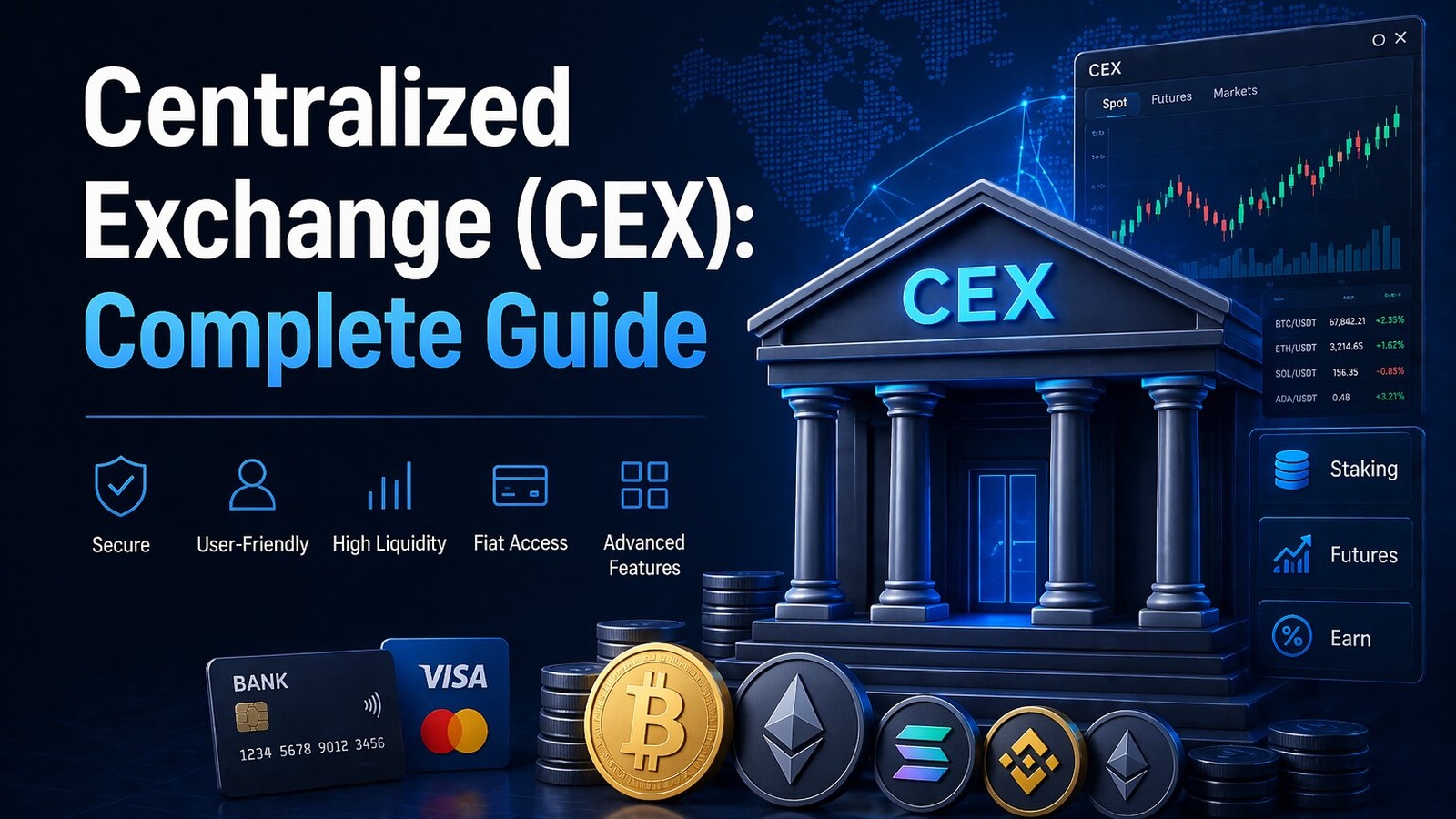
A centralized exchange, or CEX, is a company-managed platform where users can buy, sell, and trade cryptocurrencies through a structured trading system. These platforms are widely used because they support account registration, fiat payments, mobile access, and services such as staking, spot trading, or futures.
However, a centralized exchange usually holds user deposits on behalf of customers. This means users should pay close attention to security, withdrawal policies, platform reliability, and the risks of keeping funds with a third party.
What Is a Centralized Exchange?
A centralized exchange is a crypto trading platform operated by a company. Instead of trading directly on the blockchain, users place orders through the exchange’s internal system. The platform matches buyers and sellers, updates account balances, and manages deposits and withdrawals.
This structure makes trading faster and easier for many users, but it also creates dependence on the exchange’s systems, rules, and security controls.
How Centralized Exchanges Work
To use a CEX, users usually create an account, complete identity verification, deposit fiat currency or crypto, and trade through the platform’s order book. After trading, they can either withdraw their assets or keep them on the exchange.
This process is convenient, especially for beginners. However, users should remember that funds stored on a centralized platform are not fully under their personal control.
Key Features of Centralized Exchanges
Centralized exchanges commonly offer spot trading, fiat deposits, advanced order types, futures or margin products, staking services, and mobile or web-based platforms. Some also provide APIs, trading charts, portfolio tools, and customer support.
These features can make a CEX practical for different types of users, from people buying crypto for the first time to traders who need deeper liquidity and more advanced tools.
Advantages of Centralized Exchanges
One of the main advantages of centralized exchanges is convenience. Many platforms allow users to deposit through bank cards, transfers, or local payment methods. They also tend to offer higher liquidity than smaller trading platforms, which can help reduce price slippage on major trading pairs.
CEXs may also be easier for new users because they provide familiar account systems, password recovery, help centers, and simplified trading interfaces. For active traders, advanced charts, order types, and API access can also be useful.
Risks and Limitations
The biggest limitation of a centralized exchange is custody risk. When users store funds on a CEX, they usually do not control the private keys. This means they depend on the exchange to protect assets, process withdrawals, and keep the platform operational.
Other risks include hacking incidents, withdrawal delays, regulatory restrictions, account freezes, technical outages, and sudden changes in platform rules. For this reason, users should avoid treating any exchange as completely risk-free.
Security Measures
Reliable centralized exchanges often use security tools such as two-factor authentication, cold wallet storage, withdrawal address whitelists, anti-phishing codes, and internal monitoring systems. Some platforms also publish proof-of-reserves reports to give users more visibility into held assets.
These measures can reduce certain risks, but they cannot remove them completely. Users should still apply personal security practices and avoid leaving more funds on an exchange than necessary.
Centralized Exchange vs Decentralized Exchange
A centralized exchange is managed by a company and usually provides a simpler trading experience. It may support fiat payments, customer support, and faster account-based trading. However, it often requires users to trust the platform with their funds.
A decentralized exchange, or DEX, works through smart contracts and allows users to trade directly from their own wallets. DEXs give users more control over their assets, but they can be harder to use and may involve different risks, such as smart contract errors or lower liquidity on some pairs.
Common Terms in Centralized Exchanges
Some important terms in centralized exchanges include order book, maker fee, taker fee, spread, slippage, hot wallet, and cold wallet. Understanding these terms helps users evaluate trading costs, liquidity, and how orders are executed.
For example, the spread shows the difference between the buying and selling price, while slippage happens when the final trade price is different from the expected price. These factors can affect the real cost of trading.
How to Evaluate a Centralized Exchange
Before choosing a centralized exchange, users should compare security history, trading fees, liquidity, supported countries, available features, withdrawal rules, and user feedback. It is also important to check whether the platform is transparent about its policies and risk controls.
No exchange is suitable for every user. A beginner may need a simple interface and clear support, while an active trader may focus more on liquidity, order types, and trading costs.
Conclusion
Centralized exchanges make crypto trading more accessible by offering fiat access, trading tools, mobile apps, and high-liquidity markets. They can be useful for both beginners and experienced traders, depending on the platform and the user’s goals.
At the same time, users should consider custody risk, security standards, regulation, withdrawal reliability, and platform transparency. Choosing a centralized exchange should not be based only on low fees or the number of listed coins, but also on safety, policies, and personal risk tolerance.